
GC ACL
GC ACL is the on-chain access list contract that decides which addresses may use, decrypt, or delegate each encrypted handle.
In Bubble, access control is a critical feature enforced through an on-chain Access Control List (ACL) system. This robust mechanism ensures that only authorized entities are able to perform specific secure operations within the platform. By leveraging blockchain technology, Bubble provides a decentralized and transparent approach to access management, thereby enhancing security and trust.
The on-chain ACL in Bubble operates as a gatekeeper for the platform, systematically verifying the credentials and permissions of entities trying to execute particular actions. As a result, unauthorized access is effectively prevented, safeguarding the system's integrity and the data within.
Furthermore, the implementation of an on-chain ACL allows for scalable management of permissions, accommodating the evolving needs of users and applications deployed on Bubble. It adds an additional layer of security, aligning with modern security practices and ensuring that operations remain secure as the ecosystem grows.
By utilizing an on-chain ACL, Bubble not only strengthens its access control measures but also facilitates seamless permission management, essential for maintaining the efficacy and reliability of secure operations within the platform.
Uses of ACL
- Grant user permissions within the chain: When invoking a secure function in a smart contract and obtaining the result handle, the developer must call the
permitfunction to grant access permissions to any address that requires it. - Validate user permissions within the chain: GC handler contract validates inside its functions that the input handles can be accessed by the sender.
- Validate user permissions outside the chain: When the user interactor is asked to encrypt handle's data to a specific user, it validates first that this user has permissions to access this handle.
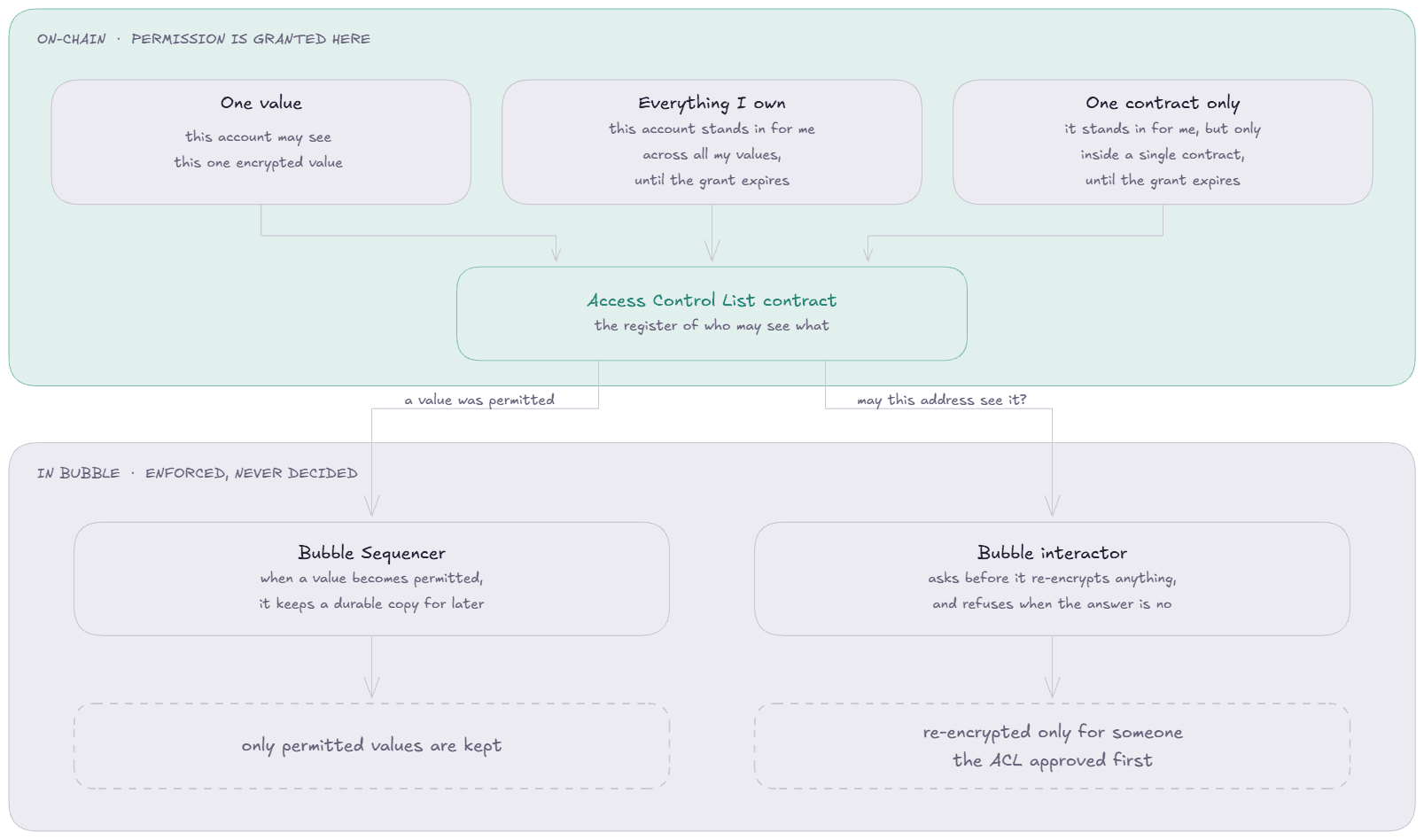
Further description and explanation on the ACL features can be found in the Access Control List section.